This post may contain affiliate links. If you click and make a purchase or sign up, I may earn a commission at no additional cost to you. I only recommend resources I believe are helpful.
Imagine waking up to new leads, fresh customer inquiries, or even completed sales — all without actively working. That’s the power of a well-built automated sales system.
Successful online businesses don’t rely on random sales or inconsistent marketing. Instead, they create systems that continuously attract, nurture, and convert customers around the clock.
Whether you run an ecommerce store, digital service business, coaching brand, or content-based business, having an automated sales system can dramatically increase your revenue while giving you more freedom and scalability.
In this guide, you’ll learn how to create a sales system that works even while you sleep.
What Is an Automated Sales System?
An automated sales system is a structured process that moves potential customers from discovery to purchase with minimal manual effort.
Instead of chasing every customer individually, your system handles much of the work automatically through:
- Content marketing
- Landing pages
- Email sequences
- Sales funnels
- Automated follow-ups
- Retargeting ads
- Ecommerce automation tools
The goal is simple:
Generate consistent sales without constantly being online.
Why Every Online Business Needs a Sales System
Without a system, sales often become unpredictable.
One month may be profitable, while the next feels completely silent.
A strong sales system helps you:
- Generate leads consistently
- Increase conversions
- Save time
- Reduce manual work
- Build customer trust automatically
- Scale your business more efficiently
Most importantly, it allows your business to continue operating even when you’re unavailable.
Step 1: Define Your Ideal Customer
Before building any sales system, you need to clearly understand who you want to attract.
Ask yourself:
- What problem does my product or service solve?
- Who benefits most from it?
- What frustrations does my audience have?
- Where do they spend time online?
- What motivates them to buy?
When you know your audience deeply, your messaging becomes far more effective.
This is one reason successful brands invest heavily in customer-focused branding and positioning.
Related reading:
- How to Create a High-Converting Brand Strategy That Attracts Loyal Customers
- 7 Ways to Target the Right Clients and Increase Your Sales
Step 2: Create a Lead Generation System
Your sales system starts by attracting potential customers into your business ecosystem.
This can happen through:
- Blog content
- Pinterest traffic
- YouTube videos
- SEO
- Facebook ads
- Instagram content
- Free resources
- Lead magnets
A lead magnet is something valuable you offer in exchange for a visitor’s email address.
Examples include:
- Free checklists
- Templates
- Guides
- Discount codes
- Mini courses
- Webinars
The goal is to capture leads so you can continue marketing to them later.
Businesses that rely only on social media followers often struggle because they don’t actually own their audience.
Related articles:
- The Ultimate Digital Marketing Strategy for Beginners
- How to Promote Your Business on Pinterest and Turn Pins into Consistent Sales
Step 3: Build a High-Converting Sales Funnel
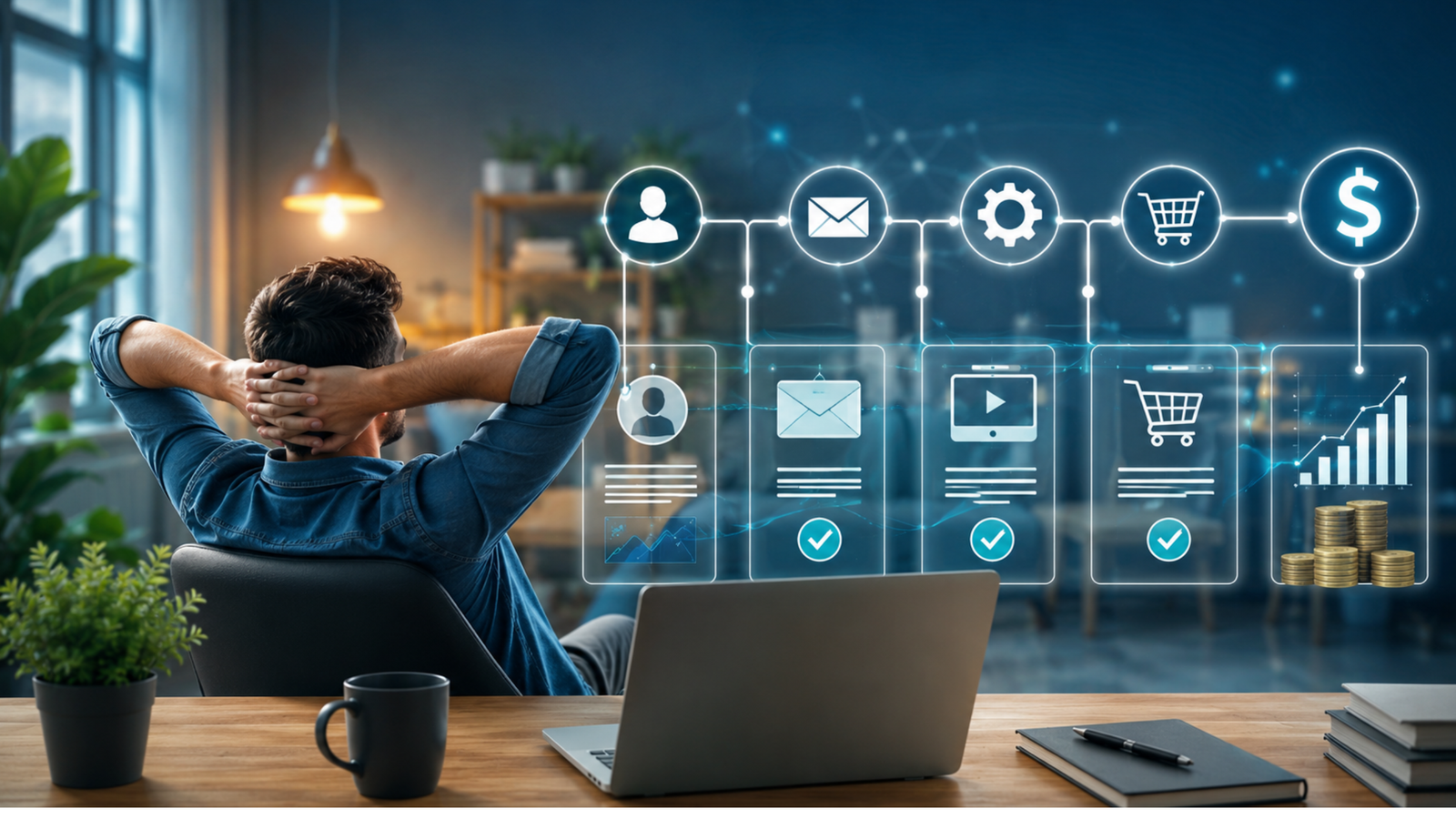
A sales funnel guides customers through the buying journey automatically.
A simple funnel looks like this:
Awareness
People discover your content through social media, search engines, ads, or referrals.
Interest
They visit your website or landing page and learn more about your offer.
Lead Capture
They subscribe to your email list or claim a free offer.
Nurturing
Automated emails build trust and educate them about your solution.
Conversion
They purchase your product or service.
Retention
You continue nurturing customers for repeat business.
Well-designed funnels remove friction and make buying feel natural.
For businesses using Facebook or Instagram advertising, funnels are essential for maximizing ad performance.
Related reading:
- Facebook Sales Funnel: Step-by-Step Guide to Getting More Sales
- How to Turn Social Media Traffic Into Paying Customers for Your Business
Step 4: Automate Your Email Marketing
Email marketing is one of the most powerful automation tools available.
Unlike social media, email allows direct communication with your audience anytime.
A strong automated email system can:
- Welcome new subscribers
- Educate leads
- Promote offers
- Recover abandoned carts
- Upsell products
- Re-engage inactive customers
For example, after someone downloads your free guide, they could automatically receive:
- A welcome email
- Educational content
- Customer success stories
- Product recommendations
- Limited-time offers
This entire process can run automatically 24/7.
Many successful businesses generate a large percentage of their revenue directly through email automation.
Related article:
Step 5: Optimize Your Website for Sales
Your website should function like a salesperson that never sleeps.
A high-converting website should:
- Load quickly
- Be mobile-friendly
- Clearly explain benefits
- Include strong calls-to-action
- Build trust with reviews and testimonials
- Make checkout simple
For ecommerce businesses, platforms like Shopify make automation and scaling easier through integrated apps and tools.
If you want professional results without spending months learning technical setup, hiring an experienced Fiverr freelancer can be a smart investment.
Many Fiverr Pro experts specialize in:
- Shopify store setup
- Sales funnel creation
- Email automation
- Landing page design
- Ecommerce optimization
- Conversion-focused branding
Working with a professional can save time and help you launch a polished, revenue-ready system faster.
Related reading:
- Done-for-You Shopify Store Setup for Ecommerce Entrepreneurs
- How to Increase Your Ecommerce Sales with Better Branding and Smarter Marketing
Step 6: Use Retargeting to Recover Lost Sales
Most visitors won’t buy the first time they discover your business.
Retargeting allows you to reconnect with people who:
- Visited your website
- Added items to cart
- Watched your videos
- Clicked your ads
- Opened your emails
Platforms like Facebook and Instagram allow businesses to show targeted ads to warm audiences who already know the brand.
Retargeting often produces some of the highest ROI in digital marketing because you’re marketing to people already interested in your offer.
Step 7: Track and Improve Your System
No sales system is perfect from the beginning.
Successful businesses continuously analyze:
- Conversion rates
- Email open rates
- Website traffic
- Cart abandonment
- Ad performance
- Customer behavior
Small improvements can dramatically increase profits over time.
Test different:
- Headlines
- Product pages
- Email subject lines
- Offers
- Ad creatives
- Landing page layouts
Optimization is what turns a basic sales system into a powerful revenue machine.
Final Thoughts
Creating a sales system that works while you sleep is one of the smartest ways to build a sustainable online business.
Instead of relying on constant manual selling, automation allows you to:
- Attract leads consistently
- Build trust automatically
- Increase conversions
- Scale more efficiently
- Create predictable revenue
Start by focusing on the fundamentals:
- Strong branding
- Lead generation
- Sales funnels
- Email automation
- Website optimization
- Retargeting
Over time, these systems compound and create long-term business growth.
Recommended reading: