
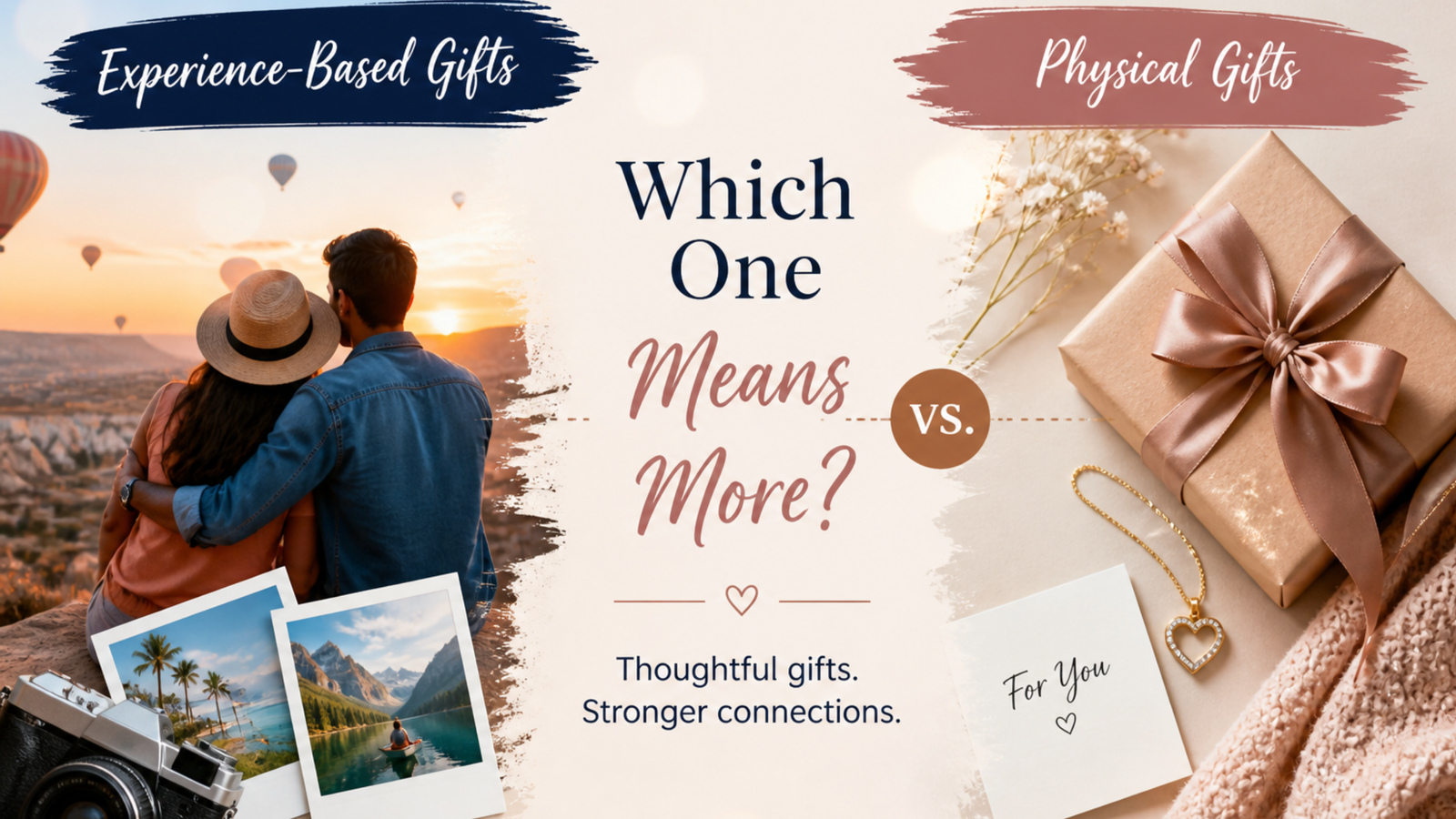
Gift-giving is one of the most powerful ways we express love, appreciation, and connection. Yet, one question keeps coming up: do experiences mean more than physical gifts—or is it the other way around?
The truth isn’t as simple as choosing one over the other. Both have value, but they impact people differently depending on timing, personality, and intention. Let’s break it down so you can make better, more meaningful choices every time you give a gift.
What Are Experience-Based Gifts?
Experience-based gifts focus on creating memories rather than giving objects. These can include:
- A romantic weekend getaway
- Concert or event tickets
- A spa day
- A cooking or art class
- A surprise date or adventure

These gifts are all about shared moments, emotions, and lasting memories.
Why Experience Gifts Feel Meaningful
- They create lasting memories
Long after the moment has passed, the memory remains. People tend to remember how they felt during an experience more than what they received. - They strengthen relationships
Experiences often involve spending quality time together, which deepens emotional bonds. - They feel personal and intentional
Planning an experience shows thoughtfulness—you considered what the person enjoys and created something around it.
If you’re looking for inspiration, you’ll love these ideas in
10 Romantic Ideas for an Unforgettable Marriage Anniversary Celebration
What Are Physical Gifts?
Physical gifts are tangible items—things you can see, touch, and keep. Examples include:
- Jewelry
- Clothing
- Gadgets
- Books
- Personalized keepsakes
These gifts provide lasting reminders of a moment or relationship.

Why Physical Gifts Still Matter
- They last over time
A meaningful object can serve as a daily reminder of love and appreciation. - They can be deeply symbolic
Certain gifts carry emotional weight—like a handwritten letter or a custom item. - They suit practical needs
Sometimes, the most appreciated gift is something useful.
If you want ideas that combine meaning with affordability, check out:
9 Thoughtful Relationship Gifts to Show Your Love in a Meaningful Way
Experience vs. Physical Gifts: The Key Differences
| Experience Gifts | Physical Gifts |
|---|---|
| Focus on memories | Focus on objects |
| Short-lived but memorable | Long-lasting and tangible |
| Great for bonding | Great for keepsakes |
| Less clutter | Can be practical or decorative |
So… Which One Means More?
Here’s the honest answer: it depends on the person and the moment.
Experience Gifts Mean More When:
- The person values quality time
- You want to strengthen your relationship
- You’re celebrating a milestone (anniversary, birthday, etc.)
Physical Gifts Mean More When:
- The person values sentimental items
- You want to give something lasting
- The gift has personal or symbolic meaning
The Real Secret: It’s Not the Gift—It’s the Thought
A poorly planned experience can feel empty.
A random physical gift can feel impersonal.
But when you match the gift to the person’s personality and needs?
That’s when the magic happens.
In fact, many of the best gifts combine both:
- A trip + a scrapbook of memories
- A dinner date + a handwritten letter
- A concert ticket + a custom T-shirt
Want to Never Stress About Gift-Giving Again?
If you’ve ever found yourself overthinking gifts or second-guessing your choices, you’re not alone.
That’s exactly why I created:
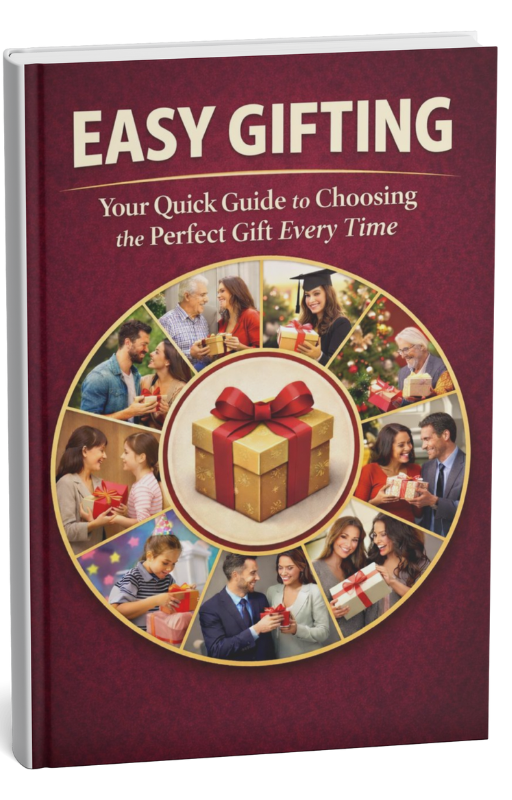
Easy Gifting: Your Quick Guide to Choosing the Perfect Gift Every Time
This guide will help you:
- Understand what people really value in gifts
- Choose the right gift for any personality
- Avoid common gift-giving mistakes
- Feel confident every time you give something
Final Thoughts
Experience-based gifts and physical gifts both have their place. One creates memories. The other creates lasting reminders.
But the most meaningful gifts?
They come from understanding, intention, and genuine care.
So next time you’re choosing a gift, don’t just ask “What should I buy?”
Ask “What will make them feel truly seen and appreciated?”
That’s the difference between a good gift—and one they’ll never forget.